
A Birkenhead Renaissance:
The Della Robbia Pottery
A confession: over the years I have not always been Birkenhead’s greatest admirer. I’ve been guilty of viewing it simply as the place you pass through on the way to Liverpool. A recent visit to the Williamson Art Gallery, however, forced me to reconsider that unfair judgement.

The gallery’s exhibition of Della Robbia pottery reveals that, for a brief but remarkable period, Birkenhead stood at the forefront of artistic innovation. Founded in 1894 by Harold Rathbone, the Della Robbia Pottery – inspired by the Italian Renaissance sculptor and artist Luca della Robbia (the example above from the Santa Croce Basilica in Florence shows just how much Rathbone must have admired the style) – embraced the ideals of the Arts and Crafts movement, championing individual craftsmanship at a time when mass production was rapidly taking over.
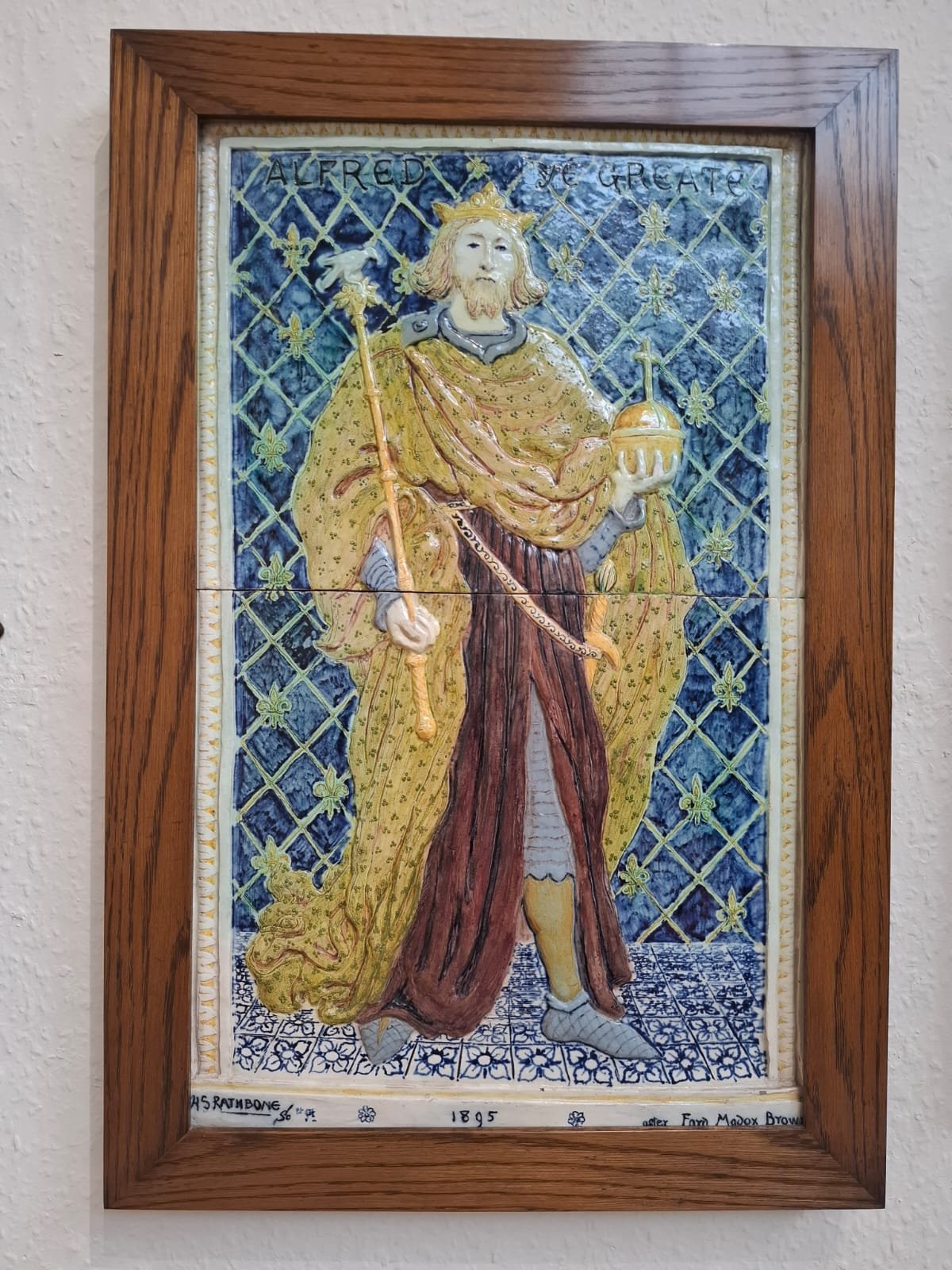
Della Robbia Pottery, 1895
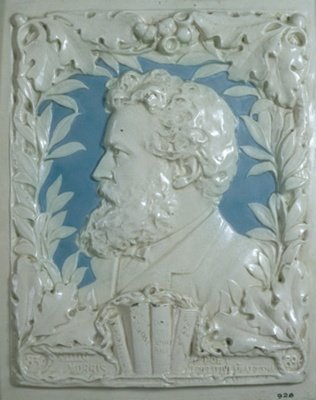
Della Robbia Pottery, 1897.
Harold Rathbone insisted that each piece created and painted by his eclectic team of potters and artists was unique: this refusal to compromise was, in the end what forced him to wind up the company in 1906. It simply cost too much to produce individual pieces of art pottery. Other companies, not least Doulton somehow managed to find a middle road maintaining individuality AND commercial viability.
The influence of the Pre-Raphaelites is unmistakable and really not surprising: Lord Leverhulme of Port Sunlight was typical of 19th century Northern industrialists who went out on an artistic limb collecting ‘modern’ art. The rich colours, flowing designs, medieval themes and love of nature bring to mind the work of Rossetti and Burne-Jones. Looking around the exhibition, it is easy to imagine these ceramic masterpieces sitting comfortably alongside the paintings and decorative arts that inspired them.
It seems extraordinary that such an ambitious artistic venture should have flourished in industrial Birkenhead. Yet perhaps that is precisely what makes the story so compelling. Della Robbia proved that beauty and creativity could thrive in the most unexpected places.
So, I owe Birkenhead an apology. I can no longer deny that this town played host to one of the most fascinating chapters in Britain’s Arts and Crafts movement. Sometimes the most rewarding discoveries are found in the places we least expect.